Some teachers embed their SEPA project into a water quality field monitoring lab. For those interested in starting such a lab, check out the resources below.
Clean Water: A Guide to Water Quality Monitoring
Although this guide dates from 1992, it contains the standard methods people still use today for water quality monitoring. Examples of common water quality parameters that teachers may use in their lab and are included in this guide are:
- Dissolved oxygen
- Transparency
- Salinity
- Temperature
- Wind speed
Supply/ Purchase List:
- Dissolved oxygen kit
- Lamotte Green Program Low Cost Water Monitoring Kit: Includes tests for dissolved oxygen (10 tests), biochemical oxygen demand (10 tests), pH (10 tests), nitrates (10 tests), phosphates (10 tests), temperature change (unlimited), coliform bacteria (3 tests), and turbidity (unlimited).
Water Quality and Phytoplankton
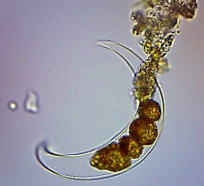
This page on Maine’s Department of Marine Resources has a phytoplankton field collection guide, a phytoplankton cell counting guide, and numerous phytoplankton ID sheets.
For a protocol detailing how to collect and analyze a phytoplankton sample, click HERE.
Why phytoplankton? Monitoring toxic phytoplankton is vital because it helps to protect human health, safeguard marine ecosystems, support fisheries and aquaculture industries, and provide early warning of harmful algal blooms before they cause significant environmental or economic damage.
Human Health: Certain toxic phytoplankton, such as some species of Alexandrium and Pseudo-nitzschia, can contaminate shellfish and fish with harmful toxins. People who eat contaminated seafood may develop illnesses such as: Paralytic Shellfish Poisoning, Amnesic Shellfish Poisoning, and Diarrhetic Shellfish Poisoning.
Marine Health: Toxic blooms, often called harmful algal blooms (HABs), can kill or weaken fish, shellfish, marine mammals, and seabirds. Some toxins directly poison animals, while dense blooms can also reduce oxygen levels in the water, causing fish kills.
Impact on Fisheries and Aquaculture: Commercial fisheries and shellfish farms depend on safe water conditions. Monitoring allows managers to detect blooms early, temporarily close affected areas, and reopen them when conditions become safe. This reduces economic losses and maintains consumer confidence in seafood products.
Tracking Environmental Change: The frequency and distribution of harmful blooms can be influenced by factors such as water temperature, nutrient pollution, ocean circulation patterns, and climate change. Long-term monitoring helps scientists understand how ecosystems are changing and predict future bloom events.