Intergenerational learning involves people of different ages working together to build new knowledge. Each brings a unique perspective to any conversation or problem-solving venture.
To get started, view our PowerPoint presentation on the Power of Intergenerational Learning. Then, explore the intergenerational learning activities below.
1. pH Activities for Home and Classroom:
Studies of pH may be helpful for students seeking to understand how metals can impact their drinking water. For example, acidic water can leach metals from pipes, resulting in lead in drinking water, even if there is no lead at the public water source or in your well! (See activities related to lead in drinking water on our Element Focus: Lead page)
- pH Take Home Activity with Datasheet
- Test Strip Comparison Charts (to copy, laminate, and send home with test strips and datasheet)
- pH Classroom Activity
You can also have your students contribute their pH data to real-world projects – “Crowd the Tap” and/or “pH in Sipayik.”
“Crowd the Tap“: This is a citizen science project and aims to create a national database of different types of pipes delivering water to taps. Instructions on how to participate can be found here.
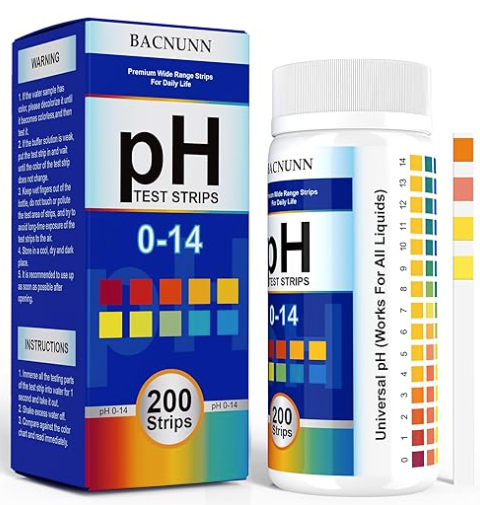
“pH in Sipayik:” This project was originally developed for Sipayik Elementary School in Pleasant Point, Maine. If your students measure the pH of their home tap water, you’re invited to contribute their results to the citizen science project on anecdata.org. The dataset will also be available on the Tuva platform for students to analyze and map. To ensure results are accurate and comparable, please use Bacnunn Test Strips and follow the package instructions. Click the image to the right to order test strips.
2. Conversation Prompts
Conversation prompts could involve any topic and can be teacher-generated, student-generated, or something that students develop with their parents. Below are some ideas. Download a printable version of these questions to send home with students.
- The Clean Water Act was passed in 1972. Is water quality better now than it was then?
- What is the best-tasting water you ever drank? Why do you think it tasted so good? Did you know whether it was safe to drink? What made you confident—or uncertain—about its safety?
- Where did your family get its drinking water when you were growing up? (City water, a private well, bottled water, or somewhere else?) How is that different from today?
- Have you ever experienced a boil-water advisory or water shortage? What happened, and how did your family respond?
- What changes in drinking water have you noticed during your lifetime?